Periocular Trauma & Reconstruction
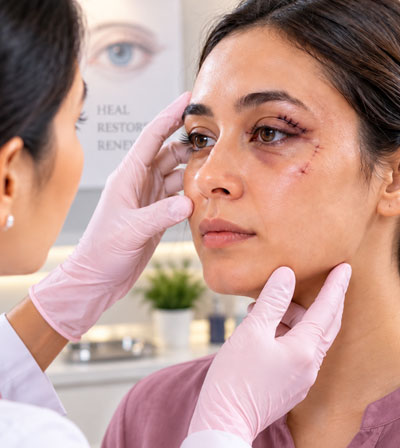
Periocular trauma refers to injuries involving the eyelids, tissues surrounding the eye, and other structures around the eye. Trauma may result from accidents, falls, sports injuries, animal bites, burns, sharp or blunt injuries, or other causes.
Injuries around the eye can affect both appearance and important functions such as eyelid closure, eye protection, tear drainage, and eye movement. Dr. Akruti Desai provides specialised oculoplastic evaluation and reconstructive care for selected periocular injuries, with treatment planned according to the structures involved and the extent of the injury.
Understanding Periocular Trauma
The tissues around the eye are delicate and closely connected. An injury that appears limited to the eyelid may sometimes involve deeper structures, the tear drainage system, or the orbital tissues.
Trauma can cause cuts, tissue loss, swelling, bruising, eyelid malposition, or damage to structures responsible for normal eyelid function. Careful examination is therefore important before deciding on the appropriate treatment.
The primary goals of periocular trauma care are to assess the injury, protect the eye, restore important structures where possible, and support appropriate functional and aesthetic recovery.
Benefits of Specialized Periocular Trauma Care
Detailed Injury Assessment
Careful evaluation helps identify damage involving the eyelids, lacrimal system, orbit, and surrounding tissues.
Function-Focused Care
Treatment considers important functions such as eyelid closure, eye protection, and tear drainage.
Individualized Reconstruction
Reconstructive planning is tailored to the location, extent, and nature of the injury.
Oculoplastic Expertise
Specialized knowledge of the eyelids and periocular structures supports comprehensive trauma care.
Common Types of Periocular Trauma
Injuries around the eye can vary considerably in their severity and the structures involved. Common types of periocular trauma include:
- Eyelid cuts and lacerations
- Partial or complete eyelid tissue loss
- Injuries involving the eyelid margin
- Injuries involving the tear drainage system
- Blunt trauma around the eye
- Animal bites and penetrating injuries
- Burns and soft-tissue injuries around the eye
- Trauma-related eyelid malposition or scarring
- Selected injuries involving the orbit and surrounding tissues
Symptoms Following Periocular Trauma
Symptoms depend on the type and severity of the injury. They may include:
- Swelling and bruising around the eye
- Cuts or wounds involving the eyelids
- Bleeding from an eyelid injury
- Difficulty closing the eye
- Changes in eyelid position or shape
- Persistent watering following an injury
- Changes in eye movement
- Double vision
- Changes in vision
- Visible scarring or tissue irregularity during healing
Any significant eye injury accompanied by changes in vision, severe pain, or other concerning symptoms requires prompt ophthalmic assessment.
Eyelid Lacerations & Injuries
Eyelid lacerations can range from superficial cuts to complex injuries involving the eyelid margin, deeper tissues, or structures responsible for eyelid movement and closure.
Injuries involving the eyelid margin require particular attention because accurate alignment can be important for normal eyelid function and eye protection.
A detailed assessment helps determine which structures have been affected and whether repair or further specialist management is required.
Lacrimal System Injuries
Trauma near the inner corner of the eyelid can sometimes involve the tear drainage system. Damage to the puncta or canaliculi may later contribute to persistent watering if not appropriately assessed and managed.
When a tear drainage structure is injured, specialised lacrimal assessment may be required as part of the overall trauma management.
How Is Periocular Trauma Evaluated?
A detailed assessment is important to understand the extent of an injury and determine whether deeper structures are involved. Depending on the injury, evaluation may include:
- Examination of the eyelids and eyelid margins
- Assessment of eyelid movement and closure
- Evaluation of the tear drainage system when indicated
- Examination of the eye and surrounding tissues
- Assessment of eye position and movement
- Evaluation of vision and relevant eye functions
- Assessment of wounds, tissue loss, and scarring
In selected cases, imaging such as CT or other orbital investigations may be required to assess fractures or deeper orbital injuries.
Personalized Trauma & Reconstruction Approach
Every periocular injury is different. The appropriate treatment depends on the location and extent of the injury, the structures involved, the timing of presentation, and the patient's overall condition.
Dr. Akruti Desai carefully evaluates the injury before recommending an appropriate management plan. The focus is on restoring important structures and supporting normal eyelid and periocular function while considering the appearance of the affected area.
- Detailed assessment of the injury
- Evaluation of eyelid function and closure
- Assessment of eyelid margin involvement
- Evaluation of lacrimal system involvement when required
- Assessment of surrounding periocular structures
- Individualized reconstructive planning
- Appropriate follow-up during healing
Treatment Approaches for Periocular Trauma
Treatment depends on the nature and severity of the injury. Depending on the clinical findings, management may include:
-
Wound Assessment & Care
Initial management focuses on evaluating the wound, protecting the eye, and determining the extent of tissue injury. -
Eyelid Repair
Selected eyelid lacerations may require careful surgical repair to restore appropriate eyelid structure and function. -
Lacrimal Repair
Injuries involving the tear drainage system may require specialised assessment and repair. -
Reconstructive Surgery
Injuries involving significant tissue loss or structural changes may require reconstructive techniques. -
Scar & Secondary Reconstruction
Some trauma-related changes may require further assessment or reconstructive treatment after the initial injury has healed. -
Coordinated Eye Care
More complex injuries may require collaboration with other ophthalmic or medical specialists depending on the structures involved.
Reconstructive Eyelid Surgery
Reconstructive eyelid surgery may be considered when trauma has resulted in tissue loss, scarring, eyelid malposition, or changes affecting normal eyelid function.
The reconstruction is planned according to the size and location of the defect and the tissues available for repair. The aim is to restore appropriate eyelid structure and support eye protection while considering the appearance of the surrounding area.
Periocular Reconstruction After Trauma
Reconstruction may sometimes be required after the initial injury has healed, particularly when there are persistent functional problems, scarring, tissue defects, or changes in eyelid position.
Depending on the individual condition, reconstructive treatment may focus on improving eyelid closure, correcting malposition, restoring tissue contour, or addressing other structural concerns.
When Should You Seek Specialist Evaluation?
Periocular injuries should be appropriately assessed, particularly when they involve the eyelid margin, inner corner of the eye, or deeper tissues.
- A significant cut or wound involving the eyelid
- Injury involving the eyelid margin
- Trauma near the inner corner of the eye
- Difficulty closing the eye after an injury
- Persistent watering following trauma
- Changes in eyelid position or movement
- Significant swelling or tissue loss
- Double vision or restricted eye movement
- Changes in vision following an injury
Significant eye injuries, particularly those associated with visual changes or suspected deeper damage, require prompt medical evaluation.
Specialised Periocular Trauma & Reconstruction by Dr. Akruti Desai
Dr. Akruti Desai specialises in ophthalmic plastic surgery, with expertise in periocular trauma and reconstruction, functional and cosmetic eyelid care, orbital tumours and inflammations, Thyroid Eye Disease, lacrimal disorders, eye cancer, and aesthetic services.
Her approach combines specialised training with careful clinical assessment and attention to individual patient needs. Treatment recommendations are made after understanding the nature of the injury, structures involved, functional concerns, and reconstructive requirements.