Lacrimal & Tear Duct Services
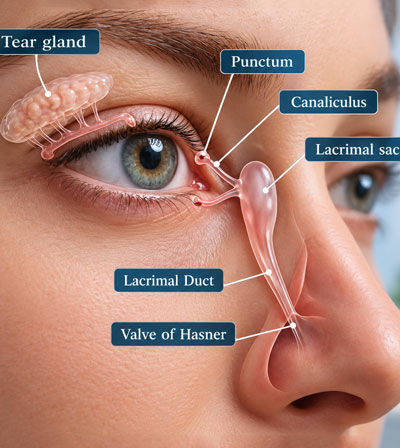
The lacrimal system is responsible for producing and draining tears from the surface of the eye. When the tear drainage pathway becomes narrowed, blocked, or affected by another condition, it can lead to persistent watering, discharge, irritation, or recurrent infections around the eye.
Dr. Akruti Desai provides specialised evaluation and treatment for lacrimal and tear duct disorders, including conditions affecting the puncta, canaliculi, lacrimal sac, and nasolacrimal duct. Her expertise includes both external and endoscopic approaches to lacrimal care, depending on the individual condition.
Understanding the Lacrimal System
Tears help keep the surface of the eye moist, comfortable, and protected. After spreading across the eye, tears normally drain through small openings called puncta located near the inner corners of the upper and lower eyelids.
From the puncta, tears pass through the canaliculi into the lacrimal sac and then through the nasolacrimal duct before draining into the nose. A problem anywhere along this drainage pathway can interfere with normal tear drainage.
Benefits of Specialized Lacrimal Care
Detailed Lacrimal Assessment
Careful evaluation helps identify whether watering is related to tear drainage, eye surface, or eyelid problems.
Accurate Diagnosis
Assessment of the tear drainage pathway helps determine the location and nature of a possible obstruction.
Personalized Treatment
Treatment is selected according to the underlying cause, anatomy, symptoms, and individual clinical findings.
External & Endoscopic Expertise
Appropriate lacrimal procedures may be considered using external or endoscopic approaches when indicated.
Common Lacrimal & Tear Duct Problems
Lacrimal disorders can affect different parts of the tear drainage system. Common conditions that may require specialist evaluation include:
- Blocked or narrowed tear ducts
- Persistent watery eyes or epiphora
- Punctal stenosis or narrowing
- Canalicular disorders
- Lacrimal sac disorders
- Nasolacrimal duct obstruction
- Recurrent infections of the lacrimal sac
- Lacrimal problems following trauma or previous surgery
Watery Eyes & Epiphora
Epiphora, or excessive watering of the eyes, can occur when the eyes produce too many tears or when tears are unable to drain normally.
Persistent watering does not always mean that the tear duct is blocked. Dry eye, allergies, eye surface irritation, eyelid malposition, and other conditions can also cause excessive tearing.
Identifying the underlying cause is therefore an important first step before deciding on treatment.
Symptoms of Lacrimal Disorders
Depending on the underlying condition, symptoms may include:
- Persistent watering or tears running down the cheeks
- Recurrent discharge around the eye
- Redness or irritation near the inner corner of the eye
- Swelling or tenderness near the lacrimal sac
- Recurrent infections around the eye
- Blurred vision caused by excessive tears
- Watering that becomes worse in cold, wind, or dusty conditions
- Persistent symptoms following previous eye or facial surgery
What Causes Tear Duct Blockage?
Tear duct obstruction can occur for different reasons and may affect different parts of the lacrimal drainage system.
- Age-related narrowing of the tear drainage pathway
- Inflammation or infection
- Previous trauma around the eye or face
- Previous eye, nasal, or lacrimal surgery
- Narrowing or blockage of the puncta or canaliculi
- Structural abnormalities of the tear drainage system
- Other conditions affecting the lacrimal drainage pathway
How Are Lacrimal Disorders Diagnosed?
A detailed evaluation is important because excessive watering can have several possible causes. During the assessment, an oculoplastic specialist may evaluate:
- Eyelid position and movement
- The position and condition of the puncta
- The eye surface and tear film
- The surrounding eyelid and periocular structures
- The tear drainage pathway
- Signs of inflammation or infection
Depending on the findings, the tear drainage system may be assessed using procedures such as probing and syringing. In selected cases, imaging or further investigations may be recommended.
Personalized Lacrimal Treatment
There is no single treatment for all lacrimal disorders. The appropriate approach depends on the location and severity of the obstruction, the underlying cause, eyelid function, eye surface condition, and other individual factors.
Dr. Akruti Desai evaluates the entire lacrimal system and surrounding structures before recommending treatment. Depending on the diagnosis, management may range from conservative care to specialised lacrimal procedures or surgery.
- Detailed evaluation of the tear drainage system
- Assessment of eyelid and punctal function
- Identification of the location of obstruction
- Evaluation of associated eye surface conditions
- Individualized treatment planning
- Appropriate follow-up and monitoring
Treatment Approaches for Lacrimal Disorders
Treatment is selected according to the underlying condition. Depending on the clinical findings, management may include:
-
Treatment of Eye Surface Problems
Dry eye, allergy, inflammation, or other surface conditions may need to be addressed when they contribute to watering. -
Punctal Procedures
Selected procedures may be considered when narrowing or blockage involves the punctum. -
Probing & Syringing
These procedures may be used to assess the tear drainage pathway and, in selected cases, address narrowing or obstruction. -
Lacrimal Surgery
Surgical treatment may be recommended for selected patients with persistent tear duct obstruction. -
Endoscopic Lacrimal Procedures
In appropriate cases, procedures may be performed through the nasal cavity using an endoscopic approach. -
External Lacrimal Procedures
An external approach may be considered depending on the location and nature of the obstruction and individual anatomy.
What Is Dacryocystorhinostomy?
Dacryocystorhinostomy (DCR) is a surgical procedure used to treat certain blockages of the nasolacrimal drainage pathway. It creates an alternative route for tears to drain from the lacrimal sac into the nasal cavity.
DCR can be performed using an external or endoscopic approach. The most appropriate technique depends on the patient's anatomy, location of the obstruction, previous procedures, and individual clinical findings.
External & Endoscopic Lacrimal Surgery
Lacrimal surgery can be performed using different approaches. An external approach provides access to the lacrimal sac through the skin, while an endoscopic approach allows access through the nasal cavity.
The choice between these approaches is individualized. The aim is to address the obstruction appropriately while considering the surrounding anatomy and the patient's specific condition.
When Should You Seek Lacrimal Evaluation?
Consider seeking specialist evaluation if you experience:
- Persistent or recurrent watering of one or both eyes
- Tears frequently running down the cheeks
- Recurrent discharge around the eye
- Swelling or tenderness near the inner corner of the eye
- Repeated infections involving the lacrimal area
- Watering that does not improve with routine eye care
- Persistent watering following previous eye or facial surgery
- Symptoms associated with changes in eyelid position
Persistent watering should not automatically be assumed to be caused by a blocked tear duct. A proper assessment helps identify the actual cause and guide appropriate treatment.
Specialised Lacrimal Care by Dr. Akruti Desai
Dr. Akruti Desai specialises in ophthalmic plastic surgery, with expertise in lacrimal and tear duct disorders, including external and endoscopic lacrimal procedures. Her areas of expertise also include eyelid conditions, thyroid eye disease, orbital tumours and inflammations, eye cancer, periocular trauma, reconstruction, and aesthetic services.
Her approach combines specialised training with careful clinical assessment and attention to individual patient needs. Treatment recommendations are made after understanding the patient's symptoms, anatomy, tear drainage function, and clinical findings.